The Non-Lucrative Visa in Spain 2026: The "No Work" Rule That Kills Applications Before Page Two
Many Spain Non-Lucrative Visa applications fail before review because of one misunderstood rule: no work. Here’s what consulates really look for in 2026.
Last updated: March 2026 · Spangolita Bureaucracy Guide · 9 min read
Quick Facts — Non-Lucrative Visa Spain 2026
What it is: A residence permit for non-EU citizens to live in Spain without working Income required: €28,800/year (single) · €36,000/year (couple) Health insurance: Spanish-authorised, no copays, no limits, no waiting period Background check: Apostilled + sworn translation into Spanish Apply from: Spanish consulate in country of residence (not from inside Spain) Processing time: 2 weeks to 3 months Initial duration: 1 year, renewable in 2-year blocks Can you work? No. Not remotely. Not for a foreign company. Not at all.
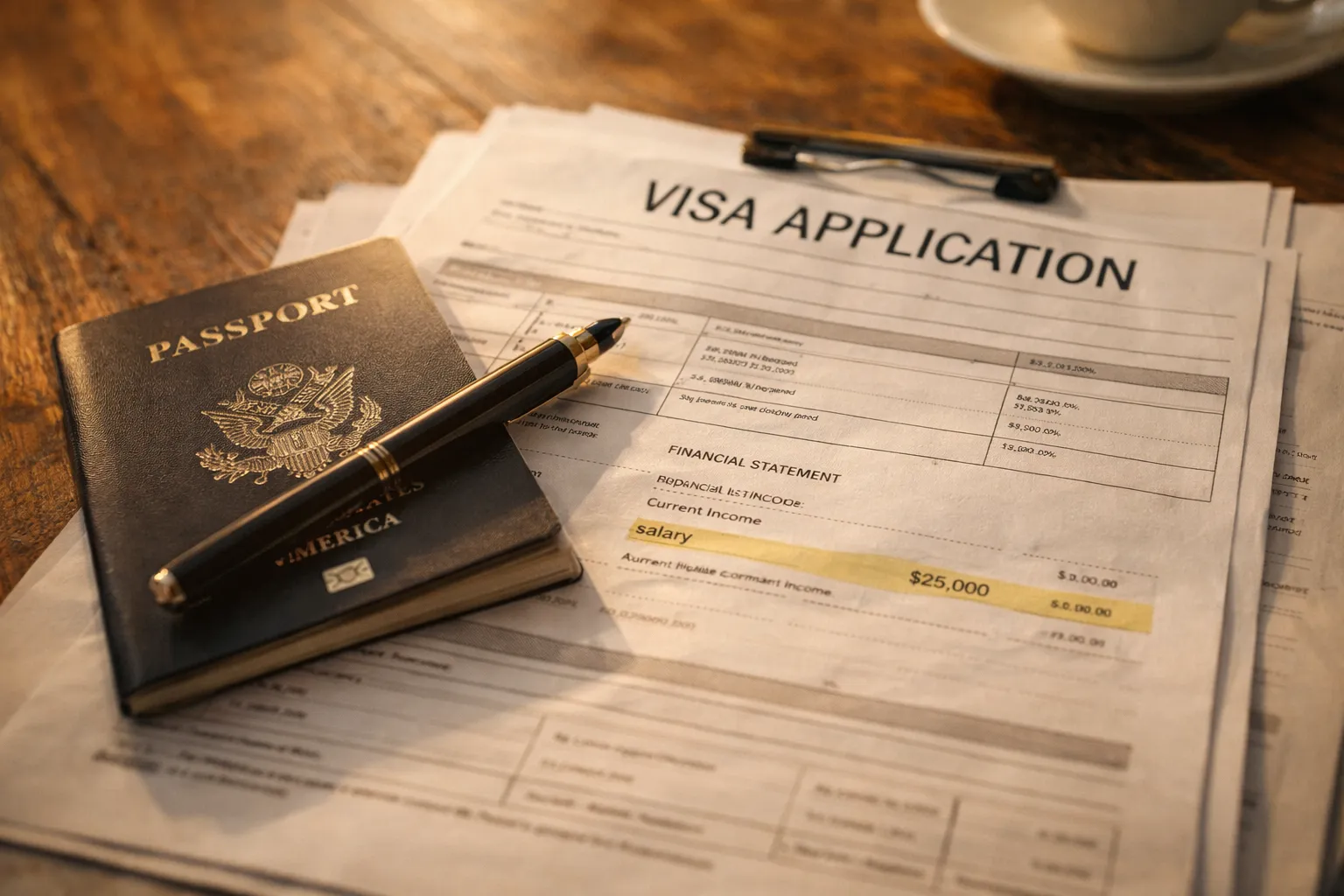
Picture this. Months of preparation. A thick, beautiful folder of documents. Bank statements highlighted in yellow. Insurance policy printed on premium paper. Criminal background check apostilled, translated, and practically gift-wrapped. The consulate appointment — booked eight weeks ago — has finally arrived. Everything is perfect.
Except one bank deposit from October says "salary."
Application denied. Next available appointment: four months from now.
The Spain Non-Lucrative Visa (NLV) is a residence permit that allows non-EU citizens to live in Spain without engaging in any form of work or professional activity. It has one rule that sits above every other requirement, above the money, above the insurance, above the criminal record: no work. Not in Spain. Not remotely. Not "just answering emails." Not managing an LLC from a beach in Málaga. Not freelancing "only a little."
And here is the part that stings: in 2026, several Spanish consulates have started asking for a resignation letter or retirement certificate before they even open the rest of the file.
Read that again. They want proof the applicant has stopped working entirely — before they look at a single bank statement.
Thousands of applicants from the US, UK, and Canada learn this the hard way every year. The word "non-lucrative" is right there in the name. It was never flexible. But it took until 2026 for consulates to start enforcing it like they mean it.
This guide is the one that should have existed before all those appointments went sideways.
What This Visa Actually Does (In Plain Language)
The Non-Lucrative Visa lets non-EU citizens live in Spain for one year — renewable — without working, as long as they can prove they have enough money to exist without earning it.
That is the entire visa in one sentence. Everything else is paperwork.
It is often called the "retirement visa," which is slightly misleading and somewhat unfair to the 34-year-olds with rental income who also qualify. Age is irrelevant. The only question the consulate cares about: can this person survive in Spain without a job?
After the first year, the visa renews in two-year blocks. After five years, permanent residency. After ten, Spanish citizenship. So yes — this "simple" one-year visa is actually the first step of a decade-long path to a European passport.
No pressure.
The 2026 Numbers — No Ambiguity
The financial requirement is built on the IPREM, Spain's public income indicator. In 2026, it stays at €600/month. The Non-Lucrative Visa requires 400% of that:
Monthly
Annual
Single applicant
€2,400
€28,800
Each additional family member
+€600
+€7,200
Couple
€3,000
€36,000
Family of 4
€4,200
€50,400
Now here comes the part that nobody puts in bold on other guides, and that catches people at the worst possible moment.
The renewal trap. The first permit covers one year. The renewal covers two. That means at renewal, the applicant must demonstrate double the original amount — €57,600 for a single person, €72,000 for a couple — either in savings or as ongoing passive income covering the full two-year period.
People budget for year one. Year two shows up like an unexpected dinner guest who expects to be fed.
Insider trick that saves applications: Several immigration lawyers confirm that consulates informally prefer to see a 10–15% buffer above the minimum, especially when the applicant holds funds in a non-euro currency. Exchange rates fluctuate. A balance of $31,200 today could be worth €27,900 next Tuesday. Showing €32,000–€33,000 instead of exactly €28,800 signals financial stability — and removes one more reason for a consular officer to hesitate.
What Changed in 2026 — Three Shifts That Matter
The remote work crackdown is getting serious. Several major consulates — including Washington and Los Angeles — now request a resignation letter or official retirement certificate as part of the application. Not every consulate demands it yet, but the trend is clear and accelerating. The signed affidavit now explicitly states the applicant will not work "by any means, either on-site nor remotely (online)." Bank statements showing regular deposits that look like invoices? Red flag. Monthly transfers from a company with "consulting" in the name? Red flag. Planning to work remotely? That is what the Digital Nomad Visa was designed for. The NLV is not a workaround, and pretending otherwise in 2026 is a fast track to rejection.
The physical residence requirement has teeth now. Renewal has always required the applicant to have actually lived in Spain — not just held residency on paper. In practice, enforcement was lax for years. People spent four months in Spain, four in Thailand, four back home — and renewals went through anyway. That era is ending. Starting late 2025, reports are increasing of renewals denied when applicants cannot demonstrate genuine residence. The commonly referenced benchmark is 183 days per year in Spain (which is also the threshold for tax residency), though the immigration regulation does not cite an exact number. The safest interpretation: live in Spain most of the year, and keep proof that supports it.
The Golden Visa route is closed for new applicants. Since April 2025, Spain has eliminated the investor visa for real estate purchases (Organic Law 1/2025). Existing holders can still renew, but no new applications are accepted. The Non-Lucrative Visa is now the primary legal pathway for financially independent non-EU citizens who want to move to Spain. Application volumes are up. Consulate waiting rooms are fuller. Appointment slots disappear faster.
Five Mistakes That Kill Applications (With the Fix for Each)
1. Any trace of active income. A deposit labelled "invoice," "consulting," or "salary" — even from abroad, even once — can sink an application. Consulates read bank statements line by line. The fix: use a separate, clean account for NLV purposes. Transfer passive income there (pension, dividends, rent). Let that account tell a simple, clear story: this person does not work.
2. The wrong health insurance (the most frustrating rejection). The policy must come from an insurer authorised to operate in Spain by the Dirección General de Seguros. It must have no copayments, no deductibles, no waiting periods, and no coverage cap. Travel insurance? No. International nomad insurance? No. Budget policies with €50 copays per doctor visit? No. This rejection is frustrating because the fix is so simple — buy the right policy. And yet it catches people every single year because they Google "health insurance Spain" and buy the first result instead of checking if the provider is actually authorised.
3. Funds that exist but cannot be touched. €28,800 sitting in a 401(k) that cannot be withdrawn is not the same as €28,800 in a checking account. A house worth €200,000 in another country is not liquid. Consulates want to see accessible cash, in the applicant's name, in a bank statement dated within the last three to six months.The fix: move the required amount into a liquid account well before applying. It needs to be visible, touchable, and clearly belonging to the applicant.
4. Criminal record technicalities. Background checks are required from every country where the applicant lived for more than six months during the past five years. Each must carry the Hague Apostille and be translated by a sworn translator. A background check without the apostille? Rejected. One with staples removed? Rejected. One where the apostille certifies a notary's signature instead of the issuing agency's? Rejected. This process alone — across multiple countries — can take six to eight weeks. It should be the first thing started, not the last.
5. Applying from inside Spain. The Non-Lucrative Visa must be filed at the Spanish consulate in the applicant's country of legal residence. Entering Spain as a tourist and then trying to switch to a Non-Lucrative Visa from within the country is not a shortcut — it is an automatic rejection. There is no hack here. Only the correct door.
The Document Timing Dance (Where Applications Live or Die)
Every document in this application has an expiration date. The medical certificate: 90 days. The criminal record: ideally recent. The insurance: must be active for one year. The bank statements: last three to six months.
Get one piece too early, it expires before the appointment. Get one piece too late, the appointment has to be postponed. The entire process is a choreography of expiration dates — and most applicants only realise this after something has already expired.
The sequence that works:
Month 1 (the slow pieces first): Criminal background checks from all relevant countries. Apostille processing. These take the longest and do not expire as quickly. Start here. Also begin gathering 6–12 months of bank statements, pension letters, and investment documentation.
Month 2 (the expensive pieces): Health insurance — purchased from a Spanish-authorised provider, active for one year, meeting every NLV requirement. Proof of accommodation in Spain (a rental contract of at least 3 months, or a property deed). Sworn translations of all foreign-language documents.
Month 3 (the fragile pieces): Medical certificate — valid only 90 days, so this must be timed carefully. Complete the visa application form and Form EX-01. Confirm the consulate appointment.
At the appointment: Everything submitted in person. Processing takes two weeks to three months depending on the consulate. Once approved, the visa grants 90 days to enter Spain. After arrival, the TIE card must be applied for within 30 days — and that clock starts the moment the passport gets stamped at the airport, not the day the visa was approved.
And then — the real fun begins. The full Spanish bureaucratic sequence: empadronamiento → Cl@ve and Digital Certificate → TIE → Social Security → health card. Each step has its own guide here on Spangolita. The Non-Lucrative Visa is just the door. The hallway behind it is longer than it looks.
The Tax Surprise That Nobody Puts in the Brochure
Spending 183+ days per year in Spain — which this visa effectively requires — automatically makes the holder a Spanish tax resident. That means worldwide income becomes subject to Spanish income tax (IRPF), even though the visa explicitly prohibits working in Spain.
Pensions, dividends, rental income from abroad, capital gains, interest — all of it is declarable to the Spanish tax authorities. Spain has double taxation agreements with the US, UK, Canada, and dozens of other countries — so the same income is not taxed twice. But the obligation to file exists regardless.
This catches people off guard because the visa is marketed as "move to Spain and enjoy life." The small print should add: "...and file a Spanish tax return every year."
It is manageable. It is not complicated. But it is a surprise that should not be one.
Insider trick: Talk to a tax advisor before moving — not after. In some cases, restructuring passive income sources before establishing Spanish tax residency can save thousands of euros per year. Once the 183-day clock starts, the options narrow considerably.
Frequently Asked Questions
Can I work remotely for a foreign company on a Non-Lucrative Visa? No. The NLV explicitly prohibits all forms of work, including remote employment. The application affidavit requires a declaration that the applicant will not work "either on-site nor remotely (online)." Anyone planning to work remotely should apply for the Digital Nomad Visa instead.
How much money is needed for the NLV in 2026? A single applicant needs €28,800/year (400% of the IPREM). Each additional family member adds €7,200/year. At renewal (covering two years), the required amount doubles. Funds must be liquid and in the applicant's name.
How long does the NLV process take? Document preparation typically takes 2–3 months. After submission, consulates have up to 3 months to decide, though many process applications in 2–5 weeks. Total timeline from start to visa in hand: approximately 3–6 months.
What type of health insurance qualifies? A policy from a provider authorised by Spain's Dirección General de Seguros, with no copayments, no deductibles, no waiting periods, and no coverage limits. Travel insurance and international nomad policies do not qualify.
Can I apply from inside Spain on a tourist visa? No. The NLV must be submitted at the Spanish consulate in the applicant's country of legal residence. Applying from within Spain — even with a valid tourist entry — is not permitted and results in automatic rejection.
What happens after the visa is approved? The visa is valid for 90 days to enter Spain. Upon arrival, the applicant has 30 days to apply for the TIE card (Foreigner Identity Card), which requires prior empadronamiento (address registration at the town hall).
Can the NLV lead to permanent residency or citizenship? Yes. After five years of continuous legal residence, holders can apply for permanent residency. After ten years, Spanish citizenship. The NLV is the first step on that path.
The Part Where Everything Gets Easier
Everything above explains the visa, the traps, and the timing. Reading it carefully already puts any applicant ahead of 80% of the people sitting in consulate waiting rooms.
But reading and executing are different things. And the distance between "I understand the process" and "every document is in order on appointment day" is exactly where applications fall apart.
Spangolita members get the execution layer:
📋 The NLV Document Checklist 2026 — every required document, organised by consulate (US, UK, Canada), with exact apostille specs, translation requirements, and the expiration window for each item. Print it. Work through it. Show up with nothing missing — and watch the other applicants nervously flipping through their folders while everything in yours is exactly where it should be.
📅 The 3-Month Application Timeline — a week-by-week calendar that tells exactly when to start each document, when to purchase insurance, when to get the medical certificate, and when to book the appointment — so that nothing expires before submission day. This single resource eliminates the timing problem that causes more rejections than any missing document.
🏥 The Insurance Qualifier — a curated shortlist of Spanish-authorised health insurance policies that meet every NLV requirement, with prices and direct links. No more Googling, no more guessing which provider is actually authorised, no more rejection for a €50 copay buried in the fine print.
🇪🇸 The Post-Arrival Sequence — the exact bureaucratic order once in Spain (empadronamiento → TIE → Cl@ve → Social Security → health card), linked to each Spangolita step-by-step guide. Because arriving in Spain with a visa and not knowing what to do next is its own special kind of anxiety.
The Non-Lucrative Visa is a document timing problem disguised as a legal process. The execution pack turns it into a checklist — and checklists do not get rejected.
The Art of the Caña: How to Order Beer in Spain Without Embarrassing Yourself
Think ordering a beer in Spain is easy? Think again. From "thimble-sized" glasses to the secret rules of free tapas, here’s how to master the caña without looking like a total tourist.
The 2026 Solar Eclipse in Northern Spain: How to Accidentally Watch the Wrong Sky in the Basque Country
The ultimate guide to the August 12, 2026 Total Solar Eclipse in Northern Spain. Don’t miss totality: find the best viewing spots in Vitoria and Bilbao, avoid the '99% trap' in San Sebastián, and get the expert weather tips you need for a perfect eclipse in the Basque Country.
The TIE Card in Spain (2026): The 30-Day Deadline Nobody Explains Until It's Too Late
Visa in hand? Your 30-day countdown to get the TIE card has already started. Don’t let a missing appointment or a wrong form freeze your life in Spain. Here is the exact, step-by-step sequence to securing your residency in 2026 without the stress.
Spain's Real Estate Wild West Is Over: Why Not Anyone Can Sell You a House in 2026
The 'lemonade stand' era of selling Spanish property is over. As of 2026, new laws in Andalusia, Valencia, and Catalonia make registration mandatory. Don't let a 'Dave' handle your deposit—learn the new legal requirements and avoid massive fines in Spain's new real estate era.
Barcelona in Three Days — A Practical City Guide (2026 Edition)
Three days in Barcelona, 2026. Tickets booked, shoes on, and coffee in hand—let’s survive Gaudí, crowded mosaics, and the occasional lost tourist. Wander Gothic alleys, stare at dragon benches, eat tapas by counting toothpicks, and actually feel the city—without pretending you can see everything.
Cl@ve and Digital Certificate in Spain 2026: The Setup Mistake That Blocks Every Future Appointment
Most expats register for Cl@ve before getting their Digital Certificate and get stuck. This 2026 guide shows the correct sequence, common NIE mistakes to avoid, and how to set up both systems properly in one afternoon.
The Spanish Health Card: Why a Social Security Number Is Not Enough
Having a Social Security number in Spain doesn’t automatically mean you can see a doctor. This article breaks down the overlooked administrative step that blocks healthcare access—and how to avoid wasting time at the health center.
Join 1k+ Readers — Get Premium Stories and Insights
Get our best stories, insights, and trending topics delivered straight to your inbox. Join thousands of readers who never miss what matters.
The Non-Lucrative Visa in Spain 2026: The "No Work" Rule That Kills Applications Before Page Two
Many Spain Non-Lucrative Visa applications fail before review because of one misunderstood rule: no work. Here’s what consulates really look for in 2026.
The Art of the Caña: How to Order Beer in Spain Without Embarrassing Yourself
Think ordering a beer in Spain is easy? Think again. From "thimble-sized" glasses to the secret rules of free tapas, here’s how to master the caña without looking like a total tourist.
The 2026 Solar Eclipse in Northern Spain: How to Accidentally Watch the Wrong Sky in the Basque Country
The ultimate guide to the August 12, 2026 Total Solar Eclipse in Northern Spain. Don’t miss totality: find the best viewing spots in Vitoria and Bilbao, avoid the '99% trap' in San Sebastián, and get the expert weather tips you need for a perfect eclipse in the Basque Country.